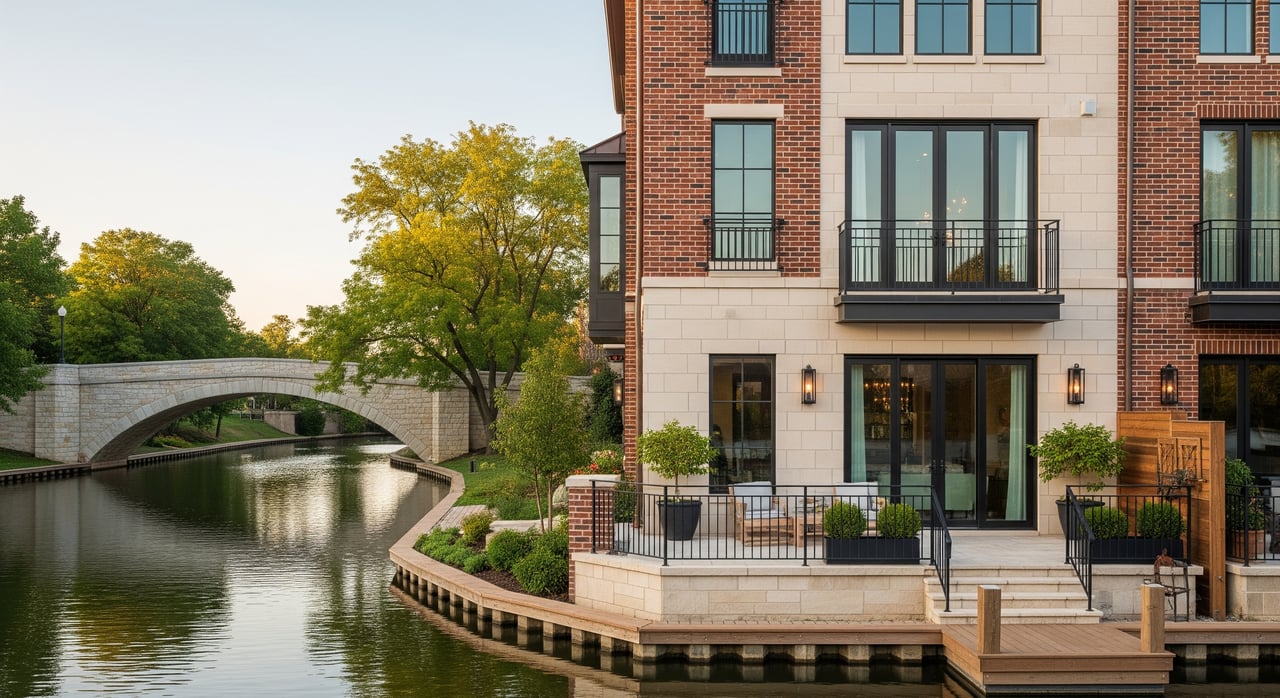
Imagine stepping out for a morning walk along the Fox River, coffee in hand, with downtown St. Charles just a few minutes away. If you are deciding between a condo, townhome, or single-family house near the water, the choice can feel big. Each option offers a different mix of lifestyle, maintenance, cost, flood risk, and resale potential. This guide breaks it all down so you can move forward with clarity. Let’s dive in.
Riverfront lifestyle in St. Charles
Riverfront living centers on the Fox River, with easy access to parks, pedestrian bridges, and the Fox River Trail. Many homes are steps from dining, shops, and seasonal events downtown. Popular green spaces like Pottawatomie Park add year-round recreation and community life. Explore programming, trails, and riverfront amenities through the St. Charles Park District.
Quick comparison at a glance
- Condos: Low day-to-day maintenance, strong walkability, HOA fees and rules to review.
- Townhomes: More space and privacy than condos, moderate maintenance, HOA varies by community.
- Single-family houses: Maximum control and yard space, highest maintenance responsibility, direct river considerations.
Condos on the Fox River
Condos fit if you want a low-maintenance lifestyle, secure buildings, and strong walkability. HOAs typically handle exterior care, common areas, and building systems, funded by monthly fees and reserves. Review the HOA’s bylaws, reserve study, budget, meeting minutes, rental rules, and any special assessments before you buy.
Financing can depend on the project’s eligibility with major lenders and the strength of HOA finances. You can learn how lenders view condo projects from Fannie Mae’s project standards and Freddie Mac’s guidelines. For insurance, most owners carry an HO-6 policy for interior coverage, while the master policy covers shared elements. If the building is in a Special Flood Hazard Area, a lender may require flood insurance; check the FEMA Flood Map Service Center to verify.
Townhomes near the water
Townhomes blend a house-like feel with shared maintenance. Some are fee-simple, where you own the unit and land while an HOA maintains shared areas. Others function more like condos, with association control over exteriors. The scope of maintenance, rules, and fees varies by development, so confirm what the HOA covers.
If the property is at low elevation near the river, review flood risk similar to a single-family home. Insurance needs depend on ownership structure and whether the address sits in a mapped flood zone. Financing usually mirrors single-family for fee-simple townhomes, while condo-style townhomes may require a condo project review.
Single-family riverfront houses
Single-family homes offer maximum control over your land, design choices, and outdoor space. Many buyers value the yard, garage, and privacy, and some locations may allow private river access where permitted. Always confirm riparian rights and dock permissions with the city and county before planning improvements.
These homes come with full maintenance responsibility for landscaping, roofs, exteriors, and any riverside elements such as docks or bulkheads. If the lot is in a floodplain or floodway, you may face specific building rules and insurance requirements. Lenders typically require flood insurance for homes in Special Flood Hazard Areas, and premiums can vary based on elevation and prior claims.
Flood zones, permits, and protections
Flood risk is a core part of any riverfront decision. Start by checking the FEMA Flood Map Service Center to see if a property is in a Special Flood Hazard Area or floodway. The City of St. Charles and Kane County enforce local floodplain ordinances and permitting for projects near the river. Rules can include elevation requirements, limits on fill, and special standards for utilities.
If you need flood insurance, explore coverage and cost basics at FloodSmart. Ask for an elevation certificate on floodplain properties and review any known flood history through seller disclosures. You can also ask the city whether Community Rating System participation affects local NFIP premiums.
Cost factors to budget
- HOA fees and reserves: Condos and many townhomes have monthly dues. Confirm what is included and whether any special assessments are planned.
- Property taxes: Review parcel history and exemptions through Kane County resources to understand trends and eligibility.
- Insurance: Standard homeowner coverage plus flood insurance where needed. Flood premiums vary with elevation, construction, and claims history.
- Maintenance and capital items: Roofs, windows, landscaping, docks, and erosion control add to the long-term budget.
Financing and resale dynamics
Condo and condo-style townhome loans often require a project review and may need larger down payments if the association has financial weaknesses. Lenders and appraisers consider floodplain status, elevation features, and past flood claims during underwriting. For reference, see Fannie Mae’s project standards and Freddie Mac’s condo guidance. Healthy HOA reserves, clear rules, and a solid maintenance history can support smoother resale.
Single-family riverfront homes tend to draw value from view corridors, yard quality, flood mitigation measures, and proximity to downtown. For any property type, buyers respond to walkability, ease of upkeep, and confidence in long-term risk management.
Lifestyle, commute, and schools
Living near the river means quick access to trails, parks, and downtown events. Commuting options include local arterials that connect to I-88, regional bus service, and nearby Metra stations in adjacent towns. Travel times vary based on route and time of day, so it helps to test your routine.
Public schools are served by St. Charles Community Unit School District 303. School boundaries can vary by address, and programs can change over time. Verify assignment and district resources directly with District 303 before you make a decision.
Which option fits your goals?
- Choose a condo if you want low daily maintenance, strong walkability, and a smaller footprint close to dining and parks.
- Choose a townhome if you want more space and privacy than a condo without the full upkeep of a single-family house.
- Choose a single-family house if you want full control over your property, yard space, and the potential for private river access where permitted.
Smart next steps for buyers and sellers
- Check flood status: Use the FEMA Flood Map Service Center and ask for an elevation certificate on floodplain properties.
- Confirm permits and rules: Contact the City of St. Charles about floodplain, river corridor, and historic district requirements.
- Review HOA health: For condos and townhomes, request bylaws, budgets, reserves, meeting minutes, and any planned assessments.
- Right-size insurance: Compare options through FloodSmart and talk with trusted carriers about coverage details.
- Explore lifestyle: Visit parks and riverwalks with the St. Charles Park District and test your commute during typical hours.
When you are ready to compare specific riverfront listings, review flood and HOA details, and map out your budget, connect with a local guide who understands the river corridor and downtown dynamics. For a calm, data-led plan tailored to your goals, reach out to Julie Riddle.
FAQs
How do I check if a St. Charles property is in a flood zone?
- Use the FEMA Flood Map Service Center to see whether the address is in a Special Flood Hazard Area or floodway, then confirm details with the city.
What does a riverfront condo HOA fee usually cover?
- Typical fees support exterior maintenance, roof and common systems, landscaping, shared insurance, and reserves; always review the HOA budget, reserves, and bylaws for specifics.
Do townhomes near the river face the same flood risks as houses?
- Many do if they sit at similar elevations, so verify flood maps, request elevation certificates, and compare insurance across specific addresses rather than assuming.
What makes condo financing different near the river?
- Lenders review the condo project’s financial health and eligibility and may require stronger reserves or higher down payments if risks are elevated.
How does flood insurance work for riverfront homes in St. Charles?
- If a home is in a mapped Special Flood Hazard Area, lenders generally require a policy; costs vary by elevation, construction, and claim history, and you can learn more at FloodSmart.
Are there special permits for docks or riverbank changes along the Fox River?
- Yes, riverfront work may require permits and must meet local floodplain and river corridor rules; start with the City of St. Charles for guidance.
How can I verify school boundaries for a riverfront address?
- Confirm current boundaries and programs directly with St. Charles Community Unit School District 303 and verify at the parcel level before you buy.
